Pay in installments of $5.54 with
 ,
,
 and
and

Shipping Estimate
USA
- USA
- CAN
- USA
- CAN
Ships within 48 hours · Estimated delivery Jul 3 - Jul 8
 Promo Codes Available:
For Your Every Summer RSVP, with Code: SUMMER15
Description
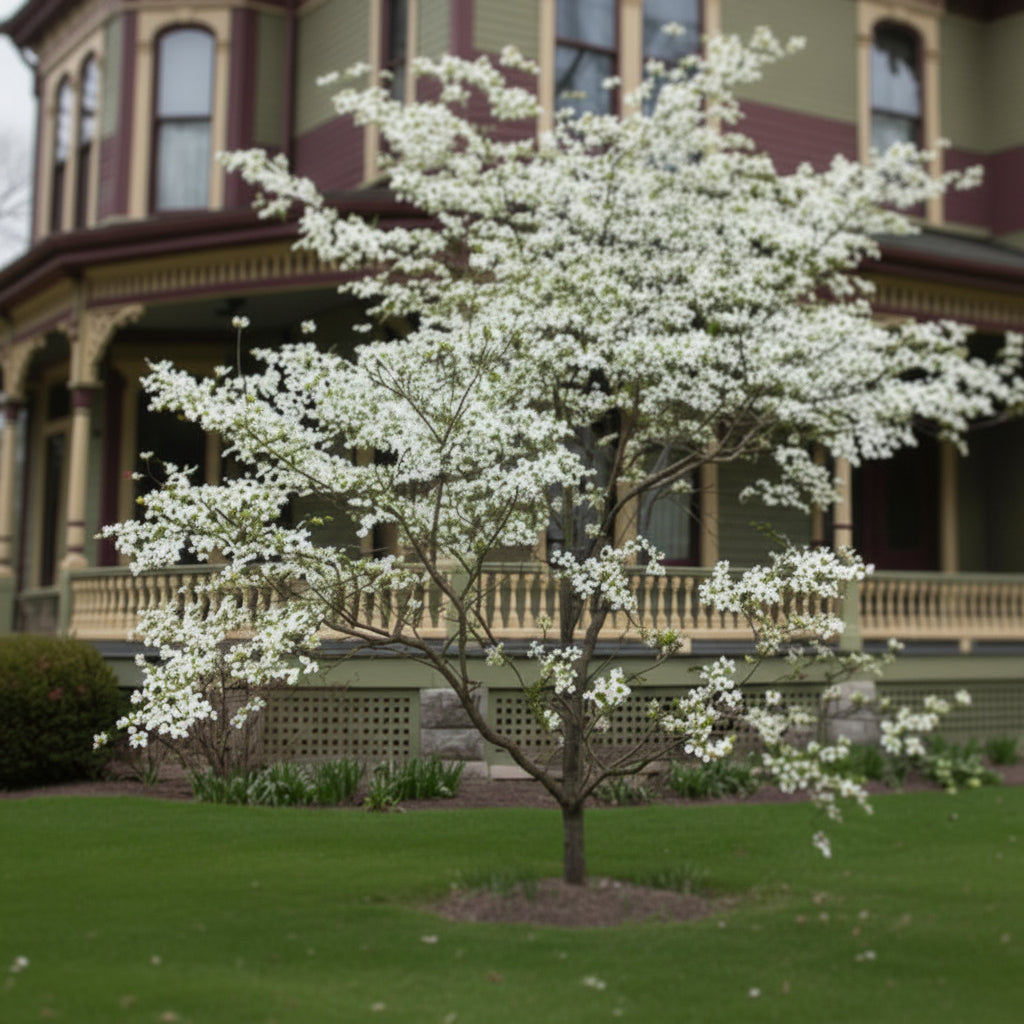
plant dogwood near house Appalachian Spring DogwoodThe Appalachian Spring dogwood stands as one of horticulture's great survival storiesa lone sentinel that watched its companions fall to disease while it remained defiantly unblemished. This cultivar offers classic white bracted beauty wrapped in the kind of ironclad disease resistance that makes it a pragmatic choice for gardeners who've watched too many beloved dogwoods succumb to fungal enemies. Appalachian Spring delivers the quintessential
The Appalachian Spring dogwood stands as one of horticulture's great survival stories—a lone sentinel that watched its companions fall to disease while it remained defiantly unblemished. This cultivar offers classic white-bracted beauty wrapped in the kind of ironclad disease resistance that makes it a pragmatic choice for gardeners who've watched too many beloved dogwoods succumb to fungal enemies.
Appalachian Spring delivers the quintessential flowering dogwood experience without the typical anxiety. Four crisp white bracts—each approximately two inches across—emerge, creating that characteristic early spring spectacle that signals winter's official retreat. These non-overlapping bracts surround clusters of small, greenish-yellow true flowers that provide the real nectar payoff, though we'd be lying if we said they steal the show from those showy white bracts.
The tree maintains a low-branching, broadly-pyramidal growth habit, maturing at 15 to 30 feet in both height and width. Its relatively upright architecture makes it slightly more compact than some wild-type dogwoods while retaining that elegant horizontal branching structure. The dark green summer foliage emerges after the blooms fade, providing dense, layered shade through the growing season. Come autumn, this cultivar puts on a respectable fall display with leaves turning shades of red and purple.
The bark follows the classic dogwood progression: smooth and light gray in youth, gradually transitioning to the distinctive blocky, alligator-skin texture that provides winter interest after the leaves drop. This exfoliating character becomes more pronounced with age, creating subtle patterns in shades of gray and brown that catch the low winter light.
Beyond its ornamental credentials, Appalachian Spring's defining characteristic is its complete resistance to dogwood anthracnose (Discula destructiva)—the devastating fungal disease that decimated wild dogwood populations across the eastern United States during the 1980s and 1990s.
The tree blooms heavily even at a young age, providing that gratifying early payoff that impatient gardeners appreciate. Its moderate size makes it suitable for a variety of landscape applications: specimen plantings near patios or foundations, woodland edge installations, street tree use in appropriate settings, or grouped plantings where their collective spring display creates visual impact. The tree performs best in partial shade, particularly appreciating afternoon protection in hotter climates, though it can tolerate full sun with adequate moisture.
It's worth noting that while Appalachian Spring laughs at anthracnose, it remains susceptible to powdery mildew—a limitation its sibling cultivar 'Appalachian Joy' addresses through different breeding selection. Choose your cultivar based on which disease poses the greater threat in your specific location.
While Appalachian Spring's disease resistance makes headlines, its ecological contributions deserve equal billing. As a native Cornus florida selection, it maintains the full suite of wildlife relationships that make flowering dogwoods ecological workhorses in eastern forests.
The spring blooms provide crucial early-season nectar and pollen for diverse pollinators. The flowers attract numerous beetles, butterflies, bee flies, and other small pollinators during that narrow window when few other woody plants are blooming. The foliage also supports substantial Lepidoptera diversity as a larval host plant, making it a significant contributor to the caterpillar biomass that sustains breeding songbirds.
The bright red drupes that develop in late summer through fall are particularly nutritious for wildlife.The fruits often persist into winter, providing sustenance when other food sources become scarce. Mammals including squirrels, foxes, skunks, chipmunks, and white-tailed deer also utilize the fruits, foliage, and twigs.
Appalachian Spring thrives in USDA Hardiness Zones 5-9. Plant in well-drained, slightly acidic soil enriched with organic matter. The tree prefers partial shade—particularly morning sun with afternoon protection in warmer climates—though it can tolerate full sun with consistent moisture. Maintain a 2-4 inch organic mulch layer to keep roots cool and moist, as dogwoods evolved as understory trees and appreciate moderated soil temperatures. Water deeply during establishment and drought periods. Pruning requirements are minimal; remove dead or damaged wood during dormancy and avoid unnecessary cuts that create entry points for pathogens. While anthracnose won't trouble this cultivar, remain vigilant for powdery mildew, borers, and scale insects, particularly on stressed trees.
Shipping Notes
- Free Standard Shipping on $100+ Orders to the USA.
- Except Preorder products are shipped in 48 hours.
- Delivery to the USA:
- Standard Shipping : 3-10 business days
- If time is of the essence, please consider selecting expedited delivery for faster service.
Exchange/Return Notes
- We offer a 30-day return/exchange service after receiving.
- Final sale items are not eligible for returns or exchanges.
- To process your return/exchange, please contact us at [email protected]
- Please click here for more details>>> Return & Exchange Policy